
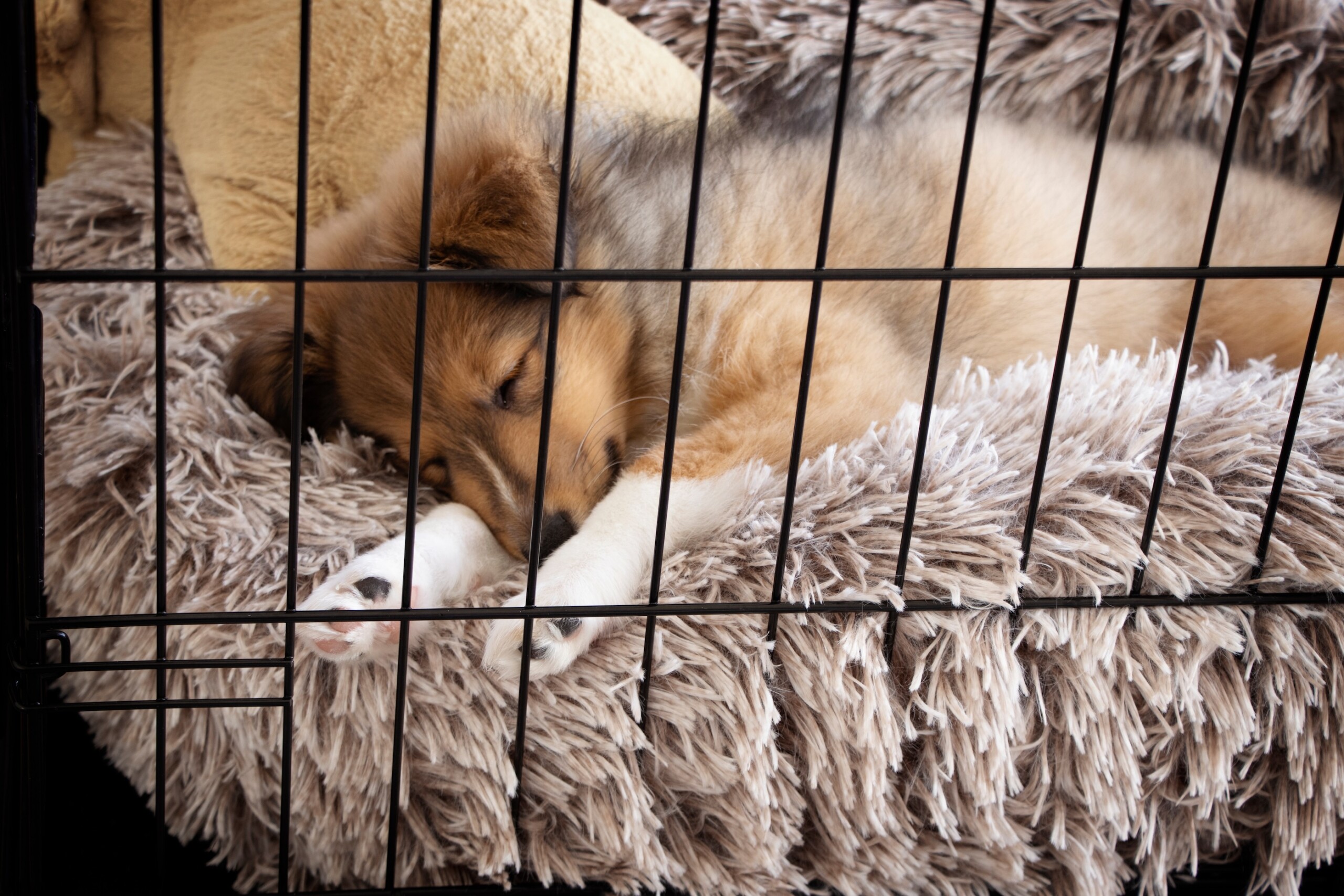
Introduction
Many people struggle with how to crate train their puppy. They often worry that using a crate is cruel, but when introduced properly, crate training can be one of the most valuable skills you teach your puppy.
A crate can keep your puppy safe when you can’t supervise them, help with potty training, and provide a comfortable place to rest. It can also make life much easier if your dog ever needs to stay overnight at the vet, visit the groomer, or travel somewhere they need to be safely confined.
The goal is to teach your puppy that their crate is a safe, comfortable place where good things happen. With a little patience and practice, you can help your puppy learn to relax in their crate without fear or stress.
This step-by-step guide will walk you through crate training your puppy or newly adopted dog, along with some tips for overcoming common challenges.
Remember: Keep training sessions short, fun, and positive. Let your puppy progress at their own pace, and avoid pushing them to the point of becoming stressed or frightened.
Need a little extra help getting started? Crate training is one of the skills we cover in our Puppy Kindergarten course at Tumblewood Canine. We cover topics such as how to overcome a variety of different puppy-related training challenges, as well as how to build other important foundation skills, including good manners, socialization, and basic obedience. It’s a great way to get your puppy off to a positive start!
Choose the Right Crate Location and Set It Up
You can use one crate or have several crates in different areas of your home. Every puppy is different. Some prefer being near the family, while others settle more easily in a quiet spot away from the hustle and bustle of a busy household. Try a few different locations to see what works best for your puppy.
Personally, I like having a crate or exercise pen in the main living area. This gives me a safe, puppy-proof space where I can put my puppy when I can’t actively supervise them. I also like having a second crate in my bedroom, right beside my bed, for sleeping at night.
Choose the right size crate. Your puppy needs enough room to stand up comfortably, turn around, and lie down. A crate that’s too large can make potty training more difficult. Most puppies naturally avoid going to the bathroom where they sleep. However, if they have too much space, they may use one end of the crate as a bathroom and sleep at the other end.
If you’re buying a crate for a puppy who will grow into a much larger dog, look for one with a divider panel. This allows you to adjust the available space as your puppy grows, without having to buy multiple crates.
Make the crate comfortable. You can add a suitable bed or blanket. A blanket or towel with familiar smells from your puppy’s previous home may also help them settle in.
However, pay attention to your puppy’s preferences. Some puppies love soft bedding, while others prefer a cool, hard surface. If your puppy chews or tears up blankets and bedding, remove them to prevent your puppy from swallowing pieces of fabric.
One important tip: If you have more than one crate, introduce each one separately. Feeling comfortable in one crate doesn’t automatically mean your puppy will feel comfortable in another.
Build a Positive Association with the Crate
For many puppies, the first night in a new home can be difficult. They’re in an unfamiliar environment, away from their littermates, and may suddenly find themselves expected to sleep alone in a crate.
Rather than waiting until bedtime to introduce the crate, start building a positive association during the day.
Here are a few simple ways to get started:
- Leave the crate door open and let your puppy explore it on their own.
- Feed meals and hide treats inside the crate.
- Play some crate games with your puppy.
At this stage, don’t worry about closing the door. Focus on helping your puppy feel comfortable going in and out on their own.
Teach Your Puppy to Go In Their Crate on Cue
Once your puppy is comfortable going in and out of their crate on their own, you can begin teaching them a cue to enter.
- Say “crate”, wait a couple of seconds, and then toss a small treat inside.
- Let your puppy go into the crate to get the treat.
- Give your puppy several treats while they’re inside, one after another.
- Before your puppy comes out on their own, give them a release word, such as “break”.
Repeat this exercise until your puppy starts responding to the word “crate” by happily going inside.
Start Closing the Door for Short Periods
Once your puppy is comfortable entering their crate, you can begin introducing the closed door.
Start with very short sessions:
- Ask your puppy to go into their crate.
- Close the door.
- Stay very close and give them several treats for remaining inside.
- Watch your puppy’s body language to make sure they’re comfortable.
- Give your release word (“break”), open the door, and let your puppy come out.
Keep these first sessions very short. The goal is to help your puppy learn that having the door closed is nothing to worry about.
Gradually Increase the Time Spent in the Crate
Once your puppy happily enters their crate and is comfortable with the door closing, you can begin teaching them to stay inside for longer periods. To start, stay close by and within sight of your puppy.
Gradually increase the time the door stays closed. Start with just a few seconds, then slowly increase the amount of time. Reward calm behaviour and release your puppy while they’re still comfortable.
If your puppy isn’t showing signs of distress, you can try giving them a special treat, such as a high-value chew, lick mat, or snuffle mat, while they’re in the crate with the door closed. This gives them something enjoyable to do. You can also start moving around and getting further away from the crate and even going out of sight.
Release your puppy when they finish their special treat, but before they start whining or pawing at the door.
If your puppy starts whining, pawing at the door, or showing other signs of distress, the exercise may be progressing too quickly. Make the next repetition easier and give them a chance to relax.
The goal isn’t simply to teach your puppy to tolerate a closed door. It’s to help them feel safe and comfortable while the door is closed.
Introduce Crate Naps
Once your puppy is comfortable entering the crate and spending short periods inside with the door closed, you can start using it for naps.
Look for signs that your puppy is getting tired, such as slowing down, becoming less interested in play, or settling in their bed. Take them outside for a potty break first, then guide them into the crate with a safe, appropriate chew or food-stuffed toy. Close the door and give them a chance to settle.
Some puppies relax more easily when you stay nearby, while others settle better when left undisturbed. Experiment with your proximity to see what helps your puppy feel comfortable.
You can also try covering part of the crate with a breathable cover to create a cozier, den-like space. Other puppies prefer being able to see what’s happening around them. Always make sure there’s plenty of ventilation and that your puppy can’t pull the cover through the bars and chew it.
If your puppy struggles to settle, don’t assume they’re being stubborn. They may need a potty break, more help learning to relax, or a slower introduction to the crate.
Make Bedtime as Comfortable as Possible
Your puppy’s first night at home can be overwhelming. They’re adjusting to a new environment and, for many puppies, sleeping without their littermates for the first time. A little preparation can make bedtime easier.
Before bed:
- Take them out for one last potty break immediately before bedtime.
- Make sure they’ve had appropriate exercise, enrichment, and time to settle.
- Set up their crate somewhere they can feel safe and supported.
I like to place a puppy’s crate right beside my bed. Being close allows you to reassure your puppy with your voice and lets you know when they need a potty break. You can even place your hand near the crate if that helps them settle.
Once your puppy is comfortable sleeping independently, you can gradually move the crate to another location if that’s your goal.
Some puppies may need to go outside several times during the night, depending on their age and individual needs. If your puppy wakes up and cries, consider whether they need to eliminate before assuming they’re simply seeking attention. Keep nighttime potty trips calm and boring, then immediately return your puppy to their crate.
Most importantly, remember that your puppy is still learning. They may not sleep through the night right away, and that’s completely normal!
Things to Avoid When Crate Training
There are a few important things to keep in mind when crate training your puppy.
Don’t use the crate as punishment.
There is a difference between putting your puppy in their crate when you can’t supervise them, or if they are overly tired and are getting into mischief, and using the crate as a punishment. Try not to allow emotions like anger or frustration affect how you send your puppy to their crate.
Don’t leave your puppy crated longer than they can comfortably manage.
Young puppies have small bladders and need frequent opportunities to go outside. A commonly used guideline for estimating how long a puppy can hold their bladder is their age in months plus one hour. For example, a three-month-old puppy may be able to hold it for approximately four hours.
However, this is only a general guideline. Every puppy is different, and many puppies need more frequent potty breaks.
Remember that puppies also need plenty of exercise, enrichment, social interaction, and time outside their crate.
Don’t ignore signs of distress.
If your puppy is whining, barking, pawing at the door, or showing signs of panic, don’t assume they’ll eventually settle if you ignore them.
Your puppy may need a potty break, reassurance, or a slower introduction to the crate. If they’re struggling, make the exercise easier and give them a chance to succeed.
Conclusion
Crate training takes time, patience, and consistency, but it can be a very useful life skill for your puppy.
Focus on creating positive experiences, rewarding calm behaviour, and gradually building your puppy’s confidence. Avoid using the crate as punishment, and never rely on simply leaving your puppy to cry for long periods in the hope that they’ll eventually give up.
If your puppy shows signs of panic, tries desperately to escape, or becomes increasingly distressed, stop and reassess your approach. Some dogs need a slower introduction, and dogs with significant confinement anxiety may benefit from help from a qualified, reward-based trainer.
The goal isn’t just to get your puppy into a crate. It’s to teach them that their crate is a safe place where they can relax and feel comfortable.
Frequently Asked Questions
1. Why should I crate train my puppy or new dog?
Crate training provides your dog with a safe, comfortable place to rest. When introduced positively, a crate can help with house training, prevent destructive behaviour when you can’t supervise, and make travel or veterinary stays easier. The goal is to make the crate a place where good things happen, never somewhere your dog is sent as punishment.
2. What age should I start crate training my puppy?
You can start crate training as soon as you bring your puppy home, usually around eight weeks of age. Introduce the crate gradually using positive experiences. It’s never too late to crate train an adult or rescue dog, but allow them time to settle into their new environment before getting started.
3. How long does it take to crate train a puppy or adult dog?
Every dog is different. Some become comfortable with a crate within a few days, while others may need several weeks or longer. Start with short, easy sessions and gradually build up as your dog becomes more comfortable. If your dog shows signs of distress, slow down and make the exercises easier.
4. How do I get my dog to go into the crate willingly?
Make the crate inviting by leaving the door open and rewarding your dog for exploring and entering. Toss treats inside, feed meals near or in the crate, and offer favourite toys or safe chews. You can also play short training games that reward entering and exiting. Never push or force your dog inside. The goal is to teach them to happily choose to enter.
5. Should I close the crate door right away?
No. First, make sure your dog is comfortable entering and exiting the crate with the door open. Once they’re relaxed inside, briefly close the door while offering treats, then open it again. Gradually increase the time, starting with just a few seconds. Practise while you’re nearby before introducing distance or leaving the room. If your dog becomes worried, make the next session easier.
6. How long can a puppy or adult dog stay in a crate?
Crate time depends on your dog’s age, bladder control, health, and comfort level. A general guideline for puppies is that they can hold their bladder for approximately their age in months plus one hour. For example, a three-month-old puppy may be able to hold it for about four hours. Adult dogs should not be left in a crate for longer than eight hours at a time, and all dogs need regular opportunities to stretch, move around, and go outside.
7. What should I do if my puppy cries or barks in the crate?
First, figure out why your puppy is vocalizing. They may need to go outside, feel lonely or frightened, or be uncomfortable with confinement. Check their needs and watch their body language. Persistent barking, panting, drooling, frantic scratching, or attempts to escape can indicate distress. Don’t assume your puppy will eventually settle if you ignore the crying. Instead, stop and make your training sessions shorter and easier.
8. Should I put my puppy in a crate at night?
A crate can be useful overnight if your puppy is comfortable in it and can be taken outside for potty breaks. Keeping the crate near your bed initially can help your puppy feel secure and make it easier to hear when they need to go outside. Keep nighttime potty trips calm and quiet, then return your puppy to bed. Young puppies may need several breaks throughout the night.
9. What should I put inside my dog’s crate?
Keep the crate comfortable and safe with suitable bedding, a familiar blanket, or an appropriately sized chew or food toy. Only include items you know your dog can use safely without chewing or swallowing pieces. Make sure the crate is well ventilated, kept at a comfortable temperature, and large enough for your dog to stand up, turn around, and lie down comfortably.
10. What if my dog hates the crate or panics when confined?
Not every dog is comfortable in a crate, and some experience genuine confinement distress. Start slowly by building positive associations through short training sessions, possibly with the door open. A dog-proofed room or exercise pen may be a better alternative while you work on crate training. If your dog panics, tries to escape, or risks injuring themselves, don’t force confinement. Consult a qualified, reward-based trainer or veterinary behaviour professional for guidance.
