
Introduction
Potty training is one of the first and most important skills to teach a new puppy and one of the many topics covered in our Puppy Kindergarten course. Many puppies are reliably house-trained between 4 and 6 months of age, but every puppy is different and will learn at their own pace. Factors that can affect the timeline include age, breed, temperament, health, previous experience, and, most importantly, consistency.
The more effectively you can prevent accidents and provide opportunities for your puppy to eliminate in the right place, the faster they are likely to learn.
That said, many new puppy owners struggle with recognizing when their puppy needs to go and preventing accidents in the house. This guide covers the essentials you need to successfully teach your puppy to eliminate in an appropriate location.
Setting a Regular Routine
Potty training is all about consistency and preventing accidents before they happen. When in doubt, it is better to take your puppy to their designated potty area too often than not often enough.
A general guideline is that puppies can typically hold their bladder for roughly one hour for every month of age, although this varies between individual puppies and should not be treated as a strict rule. For example, an 8-week-old puppy may be able to hold their bladder for approximately two hours under ideal circumstances, but they will often need to go more frequently when awake, active, excited, or after eating or drinking.
Always take your puppy to their designated potty area:
- First thing in the morning
- After eating or drinking, usually within 10 to 15 minutes
- After waking up from a nap
- After active play or exercise
- After training sessions
- Before bedtime
- Whenever you notice signs that they need to go
Frequent, predictable opportunities to eliminate help your puppy develop good habits and set them up for success.
Supervision and Preventing Accidents
Always supervise your puppy when they have freedom in the house. Close supervision allows you to notice when they need to go and prevents them from wandering off to have an accident.
Baby gates can be especially helpful for limiting your puppy’s access to areas where you cannot easily supervise them.
When you are unable to supervise your puppy, consider using a crate or exercise pen (Ex-Pen) to create a safe, puppy-proofed area. Puppies generally prefer not to eliminate where they sleep, so an appropriately sized crate can be a useful tool for helping them develop bladder control. However, puppies should never be expected to remain in a crate for longer than they can reasonably hold their bladder.
Common signs that your puppy needs to eliminate include:
- Sniffing the ground
- Circling
- Whining or pacing
- Suddenly becoming restless
- Wandering away from you
- Moving towards the door you normally use to take them outside
If you notice any of these behaviours, take your puppy to their potty area right away.
Choosing a Designated Potty Area
Having a designated potty area can make training easier. Concentrating the scent in one location can encourage your puppy to eliminate there, as puppies are naturally drawn to familiar smells. Over time, your puppy can also learn that going to this particular location is part of their potty routine.
The best potty area will depend on your lifestyle and living situation.
If you do not have access to a yard, puppy pads or indoor grass patches can provide an appropriate place for your puppy to eliminate. They can also be useful in certain circumstances when a puppy cannot be taken outside frequently enough.
Place puppy pads or grass patches somewhere your puppy can easily access them, and choose a surface that is easy to clean. If your puppy has had several accidents in the same location, you can temporarily place a pad there to encourage them to use it rather than the floor. As your puppy becomes more reliable, you can gradually move the pad towards your preferred location.
If you are training your puppy to eliminate outdoors, choose a specific area of your yard where you would like them to do their business. Taking your puppy to the same area each time can help establish a predictable routine.
Rewarding Success
Whether you are using puppy pads indoors or teaching your puppy to eliminate outdoors, always accompany them to their designated potty area.
There are two important reasons for this. First, you want to make sure your puppy actually eliminates. Second, you want to reward them immediately after they successfully go in the appropriate location.
Timing matters. Aim to reward your puppy within a few seconds of them finishing. You can use treats, praise, playtime, or a combination of rewards. Choose rewards your puppy finds motivating.
Teaching a “Go Pee” Cue
You can also teach your puppy a cue such as “go pee”. This can be particularly useful when you are travelling, visiting a new place, or your puppy is distracted by their surroundings.
To teach the cue, simply say “go pee” quietly while your puppy is actually urinating. Once they finish, immediately reward them with praise, a treat, or play. With consistent repetition, your puppy can learn to associate the cue with the behaviour.
If Your Puppy Has an Accident
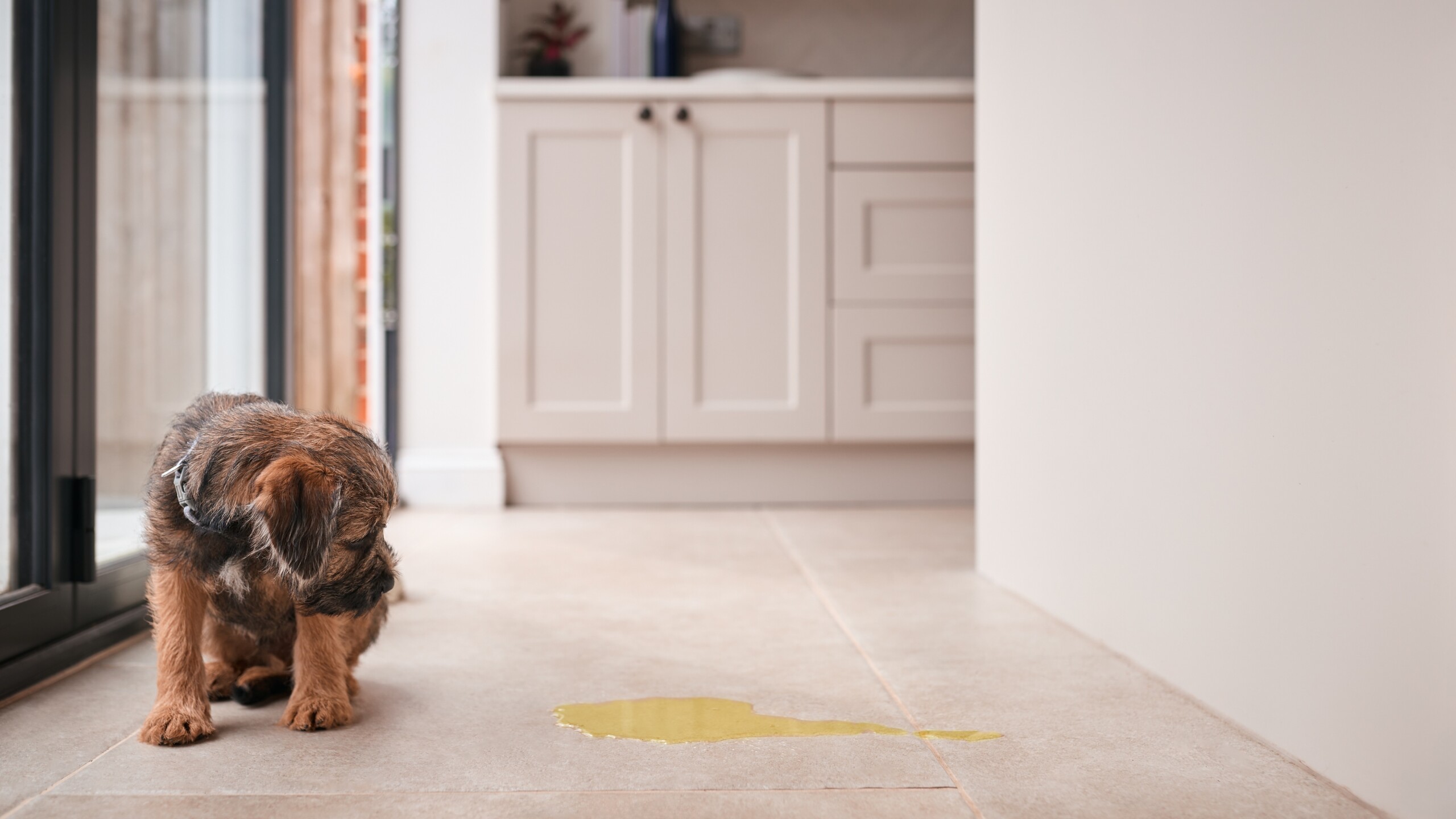
Stay calm. If you catch your puppy in the middle of an accident, gently interrupt them if possible and immediately take them to their designated potty area. If they finish eliminating there, reward them.
Never punish your puppy for having an accident. This includes yelling, scolding, or rubbing their nose in the mess. Punishment can create fear and confusion and may cause puppies to hide when they need to eliminate rather than learning where they should go.
Once your puppy has finished, clean the area thoroughly with an enzymatic cleaner. These cleaners help break down the odours that can remain after an accident, reducing the likelihood that your puppy will be drawn back to the same spot.
Remember: accidents are a normal part of the learning process. Focus on preventing the next accident rather than punishing the last one.
Conclusion
Successful potty training takes patience, consistency, supervision, and positive reinforcement. Your puppy is learning a new skill, and progress will not always be perfectly linear.
Provide frequent opportunities for your puppy to eliminate in the appropriate location and supervise them closely when they have freedom in the house. Crates, exercise pens, and baby gates can be helpful tools for preventing accidents when used appropriately.
Be sure to reward successful potty trips immediately and clean any accidents thoroughly with an enzymatic cleaner. Avoid punishment and focus instead on teaching your puppy what you want them to do.
Most importantly, celebrate the small wins and stay consistent. Every puppy learns at a different pace. With patience, a predictable routine, and plenty of positive reinforcement, you can help your puppy develop reliable potty habits.
Frequently Asked Questions
1. How often should I take my puppy outside?
Most young puppies need a potty break every 1–2 hours while they’re awake, and immediately after waking up, eating, drinking, playing, or training. Frequent trips outside help prevent accidents and build good house-training habits.
2. How do I know when my puppy needs to go potty?
Watch for signs like sniffing, circling, whining, pacing, restlessness, wandering away, or heading toward the door. If you notice any of these behaviours, take your puppy to their designated potty area right away.
3. What should I do if my puppy is having frequent accidents?
Frequent accidents usually mean your puppy needs more supervision and more frequent potty breaks. Limit their freedom indoors, use baby gates or an exercise pen when needed, and stick to a consistent potty routine. If accidents suddenly increase or you’re concerned about your puppy’s health, consult your veterinarian.
4. What should I do when my puppy has an accident?
Never punish your puppy for accidents. If you catch them in the act, calmly interrupt them and take them outside to finish, then reward them if they do. Clean indoor accidents thoroughly with an enzymatic cleaner to remove lingering odours.
5. What should I do if my puppy won’t go potty outside?
Take your puppy to a quiet, familiar potty spot on a leash and give them a few minutes to eliminate. If they don’t go, bring them back inside and confine them in a crate for 10–15 minutes before trying again. Reward them immediately when they successfully potty outside.
6. What if my puppy starts having more accidents again?
Temporary setbacks are common, especially after changes in routine or during adolescence. Return to a consistent potty schedule, supervise your puppy closely, limit their freedom, and continue rewarding successful potty trips. If accidents suddenly increase or seem unusual, contact your veterinarian.
7. How long does potty training take?
Every puppy learns at their own pace, but many are reliably house-trained between 4 and 6 months of age with consistent routines, supervision, and positive reinforcement. Focus on steady progress rather than perfection.
8. Should I use puppy pads?
Puppy pads can be helpful in certain situations, but if your goal is outdoor potty training, they may slow the transition. If you use them, keep them in a consistent location and gradually transition your puppy to eliminating outside.
9. Why does my puppy have accidents right after coming inside?
Your puppy may have been distracted outside or may not yet understand that outdoors is the potty area. Keep potty trips calm and focused, and if they don’t eliminate outside, confine them briefly before trying again. Always reward successful outdoor potty trips.
10. How do I potty train my puppy while I’m at work?
Young puppies cannot hold their bladder for a full workday. Arrange for regular potty breaks from a pet sitter, dog walker, friend, or family member, and use crate training appropriately. With a consistent routine and plenty of opportunities to go outside, your puppy can continue making excellent progress.
