
Introduction
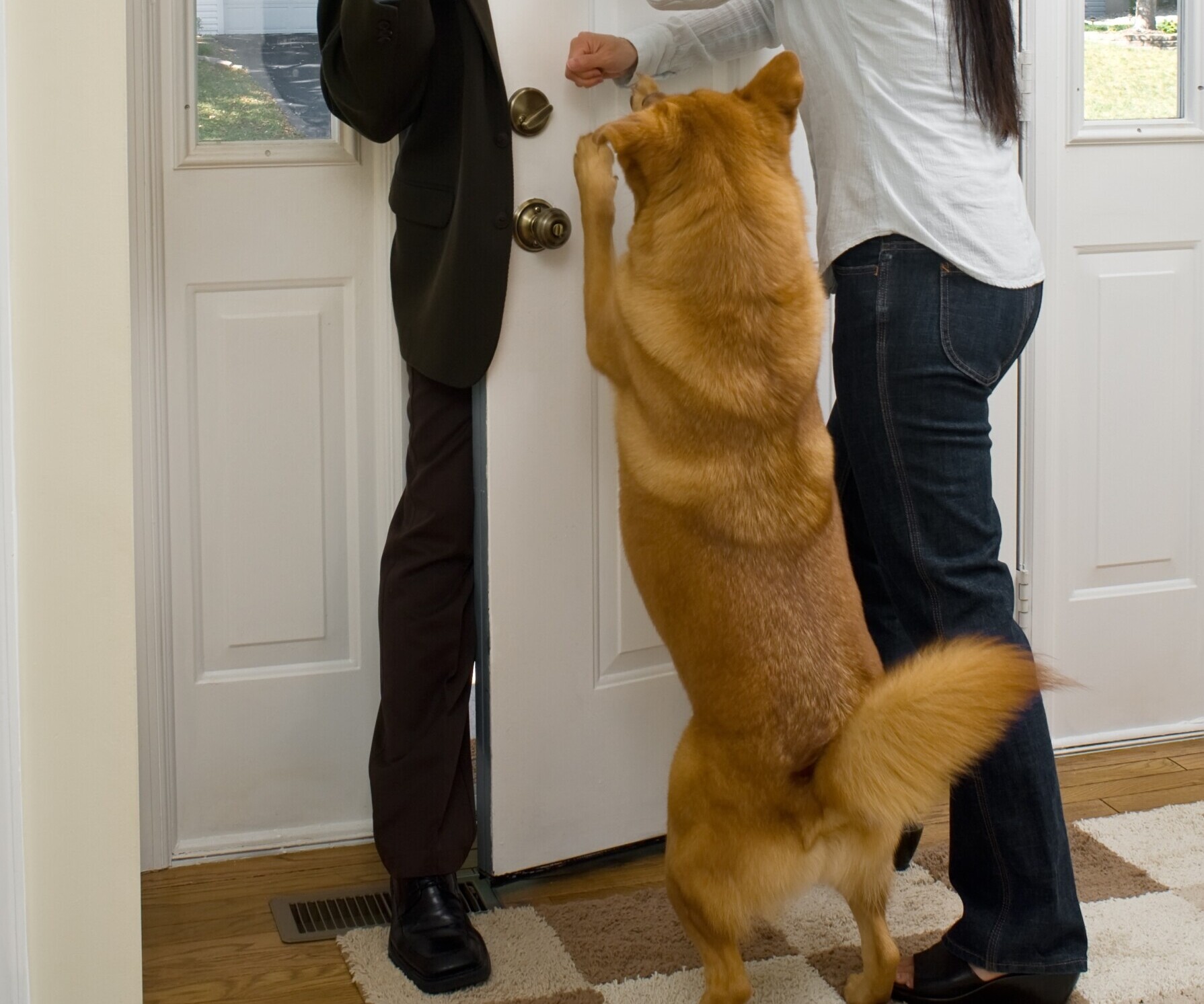
Jumping is one of the most common greeting behaviours in dogs and many owners struggle with how to stop their dog from jumping on guests entering the home. While it may be frustrating, dogs don’t jump to be dominant or disrespectful—they jump because they are excited and because people are rewarding.
For many dogs, any interaction is reinforcing. Petting, talking, laughing, making eye contact, pushing them away, or repeatedly saying “off” can all provide the attention they’re looking for. Even if you’re trying to stop the behaviour, your dog may simply learn:
“When I jump, people pay attention to me.”
Our goal is to change that pattern by preventing jumping from being rewarding while teaching your dog a more appropriate way to greet people in the home.
Check out our Household Manners Workshop for more information on how to stop all types of jumping, including for attention, or for something in your hand. This workshop also teaches other important skills like ‘place’, ‘leave-it’, and ‘drop-it’.
Manage the Environment
Before your dog has the opportunity to jump, set them up for success.
Use management tools to prevent your dog from rehearsing the behaviour while they’re learning.
Helpful management options include:
- Crate
- Baby gate
- Exercise pen (Ex-Pen)
- A leash attached before guests enter
Management doesn’t teach your dog anything, it just prevents them from repeating the unwanted behaviour, and being rewarded for it. Management isn’t a permanent solution—it’s simply a way to create successful learning opportunities.
Wait for Calm Before Greeting
When someone arrives, resist the urge to immediately introduce your dog. Instead, allow your dog a few moments to settle while remaining on leash or behind a barrier.
Watch for signs that your dog is ready:
- Four paws on the floor
- Loose, relaxed body language
- Sitting or standing calmly
- Able to respond to simple cues
If your dog is barking, whining, lunging, or bouncing with excitement, simply wait. The greeting can happen once your dog is calm enough to be successful. It is also a good idea to give your dog a toy or a special bone to chew while you wait for them to settle down. This will help prevent them from fixating on guests and becoming overly frustrated.
Remember, delaying the greeting by a few minutes is far more effective than allowing your dog to practice jumping.
Teach Your Dog What to Do Instead
Dogs learn faster when we show them the behaviour we want rather than simply trying to stop the behaviour we don’t want. Choose an alternative greeting behaviour that your dog can perform consistently.
Go to Place: Teach your dog to run to a designated bed or mat when someone enters your home. Reward them for staying on their place while guests come inside.
Grab a Toy: Many dogs naturally regulate their excitement by carrying an object. Keep a favourite toy near the front door and encourage your dog to “Go get your toy!” before greeting visitors.
Enjoy a Chew: For dogs that become highly excited, offering a stuffed Kong, lick mat, or long-lasting chew can help lower arousal while guests settle into the home.
The more your dog practices these behaviours, the more likely they are to choose them instead of jumping.
Coach Your Visitors
Your guests play an important role in your dog’s training.
Before greeting your dog, ask visitors to:
- Stay calm.
- Avoid eye contact.
- Don’t talk to your dog.
- Don’t reach out to pet them.
- Keep their hands by their sides.
- Wait for your dog to remain calm before interacting.
Many people unintentionally reward jumping simply by acknowledging the dog. Explain that the fastest way to help your dog learn is to become as uninteresting as possible until your dog offers calm behaviour.
If Your Dog Jumps, End the Greeting
If your dog jumps on a guest, the greeting should end immediately. The goal is to remove the reward your dog was seeking—attention.
Coach your guests to remain calm and quietly:
- Stand up if they were sitting.
- Turn their body away from your dog.
- Walk away if necessary.
- Avoid eye contact.
- Don’t talk to, touch, or push your dog away.
Although it may feel natural to say “off” or gently push your dog down, even that interaction can be rewarding to a dog that is looking for attention.
Wait until your dog has all four paws on the floor and is calm before the guest returns and resumes the greeting. If your dog jumps again, the guest should simply repeat the process.
With consistent practice, your dog learns a very clear lesson:
Jumping makes people go away. Calm behaviour makes people come back.
Consistency is Key
Consistency is the key to changing behaviour.
Every person who interacts with your dog should follow the same rules:
- Jumping never earns attention.
- Calm behaviour always earns attention.
- Appropriate greeting behaviours are rewarded every time.
If some people reward jumping while others discourage it, your dog receives mixed messages and learning slows dramatically.
The more consistently you respond, the faster your dog will understand that polite greetings are the only way to earn attention.
Conclusion
Changing greeting behaviour takes practice, patience, and consistency. Every calm greeting is an opportunity to reinforce the behaviour you want to see.
Rather than focusing on stopping your dog from jumping, focus on teaching them how to greet people successfully. When calm behaviour is consistently rewarded and jumping no longer works, your dog will naturally begin choosing polite greetings instead.
Frequently Asked Questions
1. Why does my dog jump on people?
Dogs jump because they’re excited and because people are rewarding. Attention—whether it’s petting, talking, laughing, or even pushing your dog away—can reinforce the behaviour. Your dog isn’t trying to be dominant; they’re simply repeating a behaviour that has worked for them in the past.
2. Should I tell my dog “Off” or “No”?
It depends. If your dog already understands a cue like “Off,” it can be helpful. However, many dogs haven’t learned what those words actually mean. Repeating “Off!” while pushing your dog away often gives them exactly what they wanted—your attention. Instead, calmly remove your attention and reward your dog when they have four paws on the floor.
3. Will my dog eventually grow out of jumping?
Most dogs don’t outgrow jumping on their own. In fact, if jumping continues to earn attention, it often becomes a stronger habit over time. Teaching polite greetings early prevents the behaviour from becoming well established.
4. Should I knee my dog in the chest or push them away?
No. Physical corrections can damage your relationship with your dog, increase fear or frustration, and don’t teach an appropriate greeting behaviour. They can also accidentally reinforce jumping by giving your dog attention. Instead, calmly remove your attention and reward calm behaviour.
5. What should I teach my dog instead of jumping?
Teach an alternative behaviour that’s incompatible with jumping, such as:
- Going to their Place
- Sitting politely
- Getting a favourite toy
- Enjoying a stuffed Kong or chew
It’s much easier for dogs to learn what to do than to simply learn what not to do.
6. What should visitors do if my dog jumps on them?
Visitors should remain calm and become as uninteresting as possible. They should avoid eye contact, talking, touching, or pushing your dog away. If your dog jumps, they should calmly stand up, turn away, or walk away until your dog settles. Once your dog is calm, they can resume the greeting.
7. Should I let my dog greet every visitor?
Not right away. If your dog struggles with excitement, use management tools such as a leash, crate, baby gate, or exercise pen while they calm down. Waiting an extra minute for your dog to settle sets them up for a much more successful greeting.
8. What if my dog gets excited every single time someone comes over?
That’s completely normal. Excitement is an emotion, not disobedience. Focus on managing the situation, teaching an alternative behaviour, and practicing with familiar people before expecting your dog to remain calm around exciting visitors.
9. How long will it take to stop my dog from jumping?
Every dog learns at a different pace. Some dogs improve within a few weeks, while others need several months of consistent practice. The biggest factor affecting progress is consistency. If jumping is sometimes rewarded and sometimes ignored, learning will take much longer.
10. What’s the biggest mistake people make?
The biggest mistake is unintentionally rewarding the jumping. Talking to your dog, laughing, petting them, saying “off,” or pushing them down all provide attention. Instead, remove your attention when your dog jumps and immediately reward calm behaviour. When everyone responds consistently, your dog quickly learns that polite greetings are the best way to earn attention.
